




WORDS: Joel Guth — President, iQ Power Tools; Paul Guth — Vice President Research and Development, iQ Power Tools; Stephanie Civello — Executive Assistant iQ Power Tools
PHOTOS: Paul Guth — Vice President Research and Development, and Sarah Hurtado — Marketing Manager, iQ Power Tools
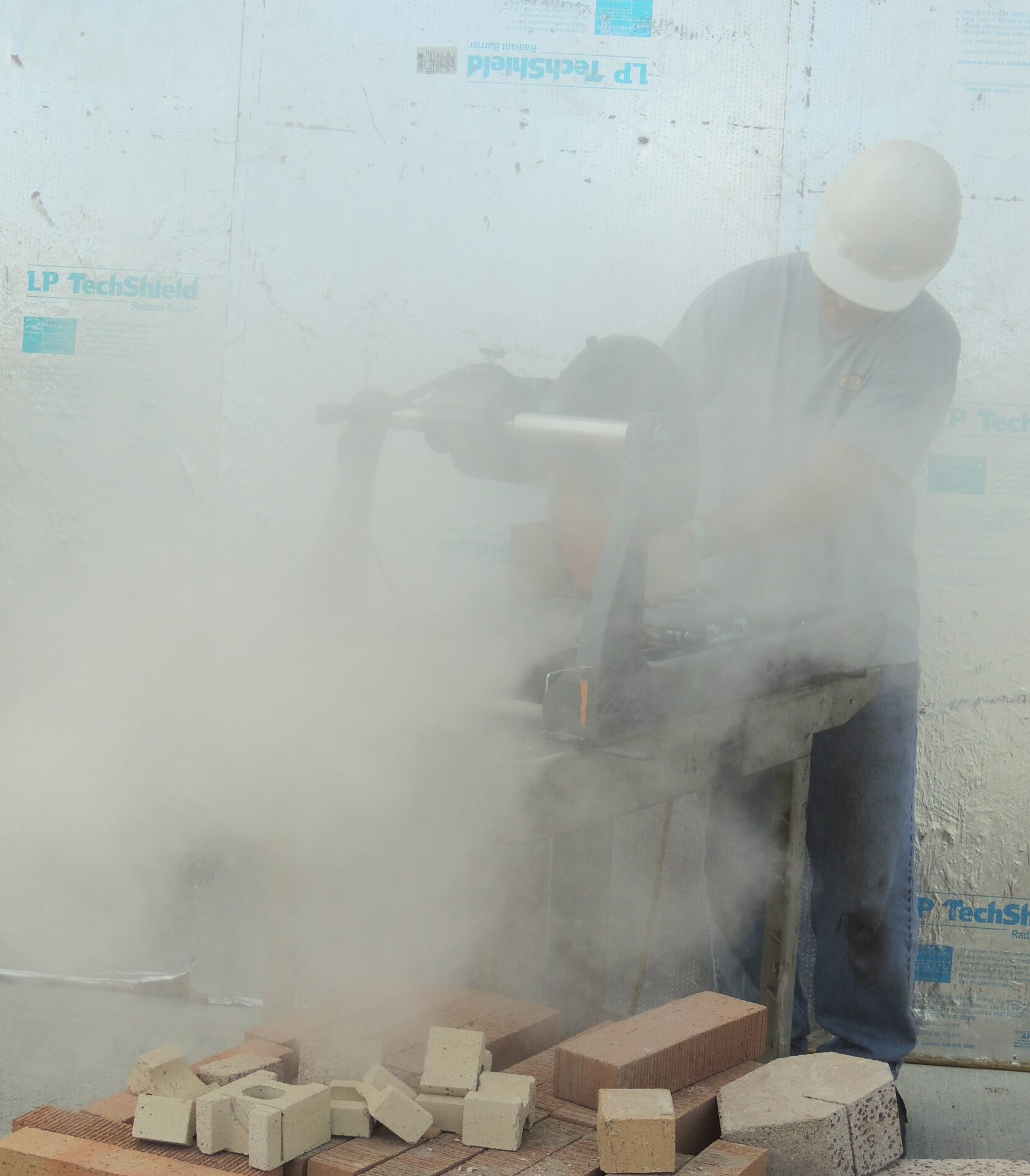
About 20 years ago we began to understand the silica dust problem and recognized how big the problem was for our business. It makes a huge mess, it costs a great deal of money, and is a threat to the health and safety of our industry as a whole.
Through all our years of industry research, our own observation, and our own testing we’ve learned a lot about dust.
One question we asked ourselves was, how did we get where we are today?
Part of the answer lies with the innovation of the diamond blade. While diamond tools have advanced the construction industry with our ability to cut concrete, stone and masonry materials, they’ve also created a hazard by exposing workers to respirable silica dust.
By looking at the history of the diamond blade, as well as the cost and consumption of diamond blades in the US, we can begin to understand how silica dust has become a focus today in the construction industry.
Masonry has been around for thousands of years. The last 80 years, however, we have seen the greatest innovations in the trade. Below is a timeline on the history of masonry and concrete cutting and the innovation of the diamond blade.
1926 – Felker Diamond Segmented Blade
Felker invented the diamond segmented blade and it was first used in manufacturing, specifically to cut raw materials used in electrical components.
1937 – Clipper Block Saw
Clipper patented the masonry saw that could utilize carborundum abrasive blades and diamond segmented blades for cutting masonry, concrete and stone products. Because the diamond segments were brazed welded, water was required for cooling during cutting rations.

1980 – Laser Welded Dry Cut Diamond Blade
Laser welding technology from the aerospace industry was introduced to the manufacturing of segmented diamond blades. The advantages of laser welding proved to be a higher-quality weld and greater bonding strength of the diamond segment to the diamond blade core. This superior weld also allowed for dry cutting, and water was no longer needed for blade cooling.

2000 – Purpose Built 14” Dry Cut Masonry Saw B-X3
With the advancement of laser welding and dry cutting blades, MK Diamond introduced the first purpose built 14-inch dry cutting masonry saw: the BX-3. This saw had a big impact on the industry because it changed the way masonry saws could be used. Weighing only 40 pounds, the BX-3 was portable and allowed the operator to cut right where he was working, even on scaffolding.

In 1984 the average price of a 7” diamond blade was $100 or more. As more diamond blade manufacturers embraced laser welding technology, laser welded diamond blades gradually reduced in price.
Over 30 years later, the price of a 7” diamond blade can be as low as $10, a decrease of about 10 fold. Laser welded diamond segmented blades have become a highly economical tool for cutting masonry concrete and stone products and a preferred method throughout the United States.
With the advancement of technology and decrease in cost we’ve seen a dramatic increase in consumption.
On average there are nearly 7 million diamond blades consumed annually in the US construction market. These blades range in size from 4” to over 30”, used on many types of rotary cutting devices, i.e. saws and grinders cutting many types of concrete, masonry and stone materials.
So what is the result of cheaper, more efficient diamond blades, decreased cost of blades, and the increased consumption? The answer is an exponential increase in the amount of masonry and concrete materials being cut, and the potential for silica dust exposure.
Based on diamond blade consumption we can calculate there are over 200,000 workers using these diamond tools and potentially exposing themselves to hazardous silica dust.
Which of course is why dust has become such a focus in our industry, and partly why OSHA has been compelled to pass a new silica standard.
We’ve been studying silica dust for over 20 years. We offer silica education for the construction industry, with a goal to help the average contractor understand the hazard and what they can do to protect themselves and their workers.
You don’t need to become a silica expert, but there are a few things every contractor needs to know:
Learn more about silica dust and how to protect yourself and your workers.

We are deeply saddened to share the passing of our longtime colleague and friend, Rolly Cox, who passed away peacefully on February 11, 2026. Rolly

Masonry is one of humanity’s oldest conversations with gravity and weather. Long before blueprints and permits, people stacked what the earth gave them and learned,

MGT FastMixer: High-Output Concrete, Mortar & Stucco Mixing for Job Sites When speed, consistency, and reliability matter on the job site, the right mixing equipment

When it comes to masonry construction, the strength of your wall depends on more than just brick and mortar — it relies on the right