




ABC’S OF FIRE EXTINGUISHERS

Just as there is a right tool for every job, there is a right extinguisher for every fire.

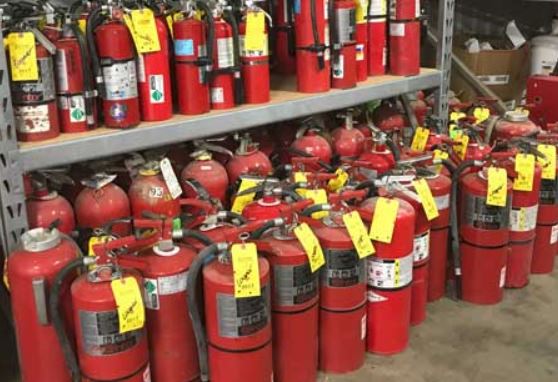
The class of an extinguisher, identified on its nameplate, corresponds to the class or classes of fire the extinguisher controls. On most construction jobs, we are concerned with Class A, B and C fires. Consequently, the best extinguisher to have on a job is a multi-purpose Class ABC extinguisher, which contains a dry, powdered chemical under pressure.

The following describes the classes of fire and the kind of extinguisher that can be used on each:

Class A Fires

Wood, paper, trash, and other materials that have glowing embers when they burn. Extinguisher to Use: For Class A fires, use a Class A or Class ABC extinguisher. Always remember that a Class A extinguisher contains water and should be used only on a Class A fire. Used on gasoline, it can spread the fire; used on electrical fires, it can cause you to be electrocuted.

Class B Fires

These are fires involving flammable liquids and gases, such things as gasoline, solvents, paint thinners, grease, LPG, and acetylene. Extinguisher to Use: Use Class B or Class ABC extinguishers.

Class C Fires

These are fires in energized electrical equipment. Extinguisher to Use: Use a Class BC or Class ABC extinguisher.

  1. Use the fire extinguisher whose class corresponds to the class of the fire.
  2. Never use a Class A extinguisher, which contains water or foam, on a liquid or electrical fire.
  3. Know where extinguishers are located and how to use them. Follow the directions printed on the label.
  4. Keep the area around the fire extinguisher clear for easy access.
  5. Don’t hide the extinguisher by hanging coats, rope, or other materials on it.
  6. Take care of the extinguishers just as you do your tools.
  7. Never remove tags from extinguishers. They indicate the last time the extinguisher was serviced and inspected.
  8. Report defective or suspect extinguishers to your Supervisor, so that they can be replaced or repaired.
  9. When inspecting extinguishers, look for cracked hoses ,plugged nozzles, and corrosion. Also, look for damage that may have been done by equipment running into the extinguishers.
  10. Don’t use extinguishers for purposes other than fighting fires.

Nobody wants afire. But if one starts, know what extinguishers to use and how to use them.

Share:

Facebook
Twitter
LinkedIn
Email
Print
Picture of Trowel Trades inc.

Trowel Trades inc.

Trowel Trades Inc specializes in equipment rental, tool retail, and repair services for the construction industry. Trowel Trades is a niche supplier of Masonry and Concrete tools and equipment as well as many other general construction tools. Trowel Trades is the Georgia Hydro Mobile Mast Climber dealer and we have a full compliment of conventional scaffolding and accessories. We stock job crucial items such as, Mortar Mixers, Concrete Mixers, Cut Off Saws, Block and Brick Saws, Grout Delivery Systems, Trash Chutes, Material Handlers, Power Trowels and more. If you can't get away from the job to pick up what you need we can ship it to your location. If we don't have it we can get it, and if we can't get it we will find you who can!

Social Media

Most Popular

SUBSCRIBE AND SAVE

Subscribe To See Promotions

No spam, notifications only about products and updates.

Related Posts

Rolly Cox

Remembering Rolly Cox

We are deeply saddened to share the passing of our longtime colleague and friend, Rolly Cox, who passed away peacefully on February 11, 2026. Rolly

A Brief History of Masonry

Masonry is one of humanity’s oldest conversations with gravity and weather. Long before blueprints and permits, people stacked what the earth gave them and learned,

General Inquiry

We aim to respond quickly with an accurate quote. Please allow up to 24 hours for our reply. Thank you for your patience, and we look forward to working with you.